Water Stain on the Ceiling? What It Means and What to Do Next
What a water stain on your ceiling is telling you, and what to do before it gets worse.
A water stain on the ceiling means water has reached the drywall from above, from a roof leak, an ice dam, a plumbing leak or condensation in the attic. Where the stain sits, when it appears and how it looks usually tell you which. Find and stop the source first, then dry, prime and repair the ceiling.
What does a water stain on the ceiling tell you?
Read the stain by its location, its timing and its look. Together, those three clues usually point to the source.
Where the stain is. A stain near an outside wall or in a corner on the top floor usually points to a roof leak or an ice dam. A stain under a bathroom, kitchen or laundry room is most likely plumbing, such as a supply line, drain, toilet seal or shower pan. Stains around a chimney, skylight, vent pipe or roof vent usually come from failed flashing around that opening. If the stain is around a ceiling vent or duct, look at the swamp cooler, the AC condensate line or condensation on the duct itself.
When the stain appears. A stain that shows up after rain or a warm spell that melts snow is most likely a roof leak or an ice dam. If it appears after someone showers or runs a fixture upstairs, suspect a drain or fixture leak. A stain that keeps growing even in dry weather usually means a pressurized supply line, which leaks all the time. Scattered spots after a deep cold snap are often frost melting in the attic, commonly from a bath fan venting into the attic instead of outside.
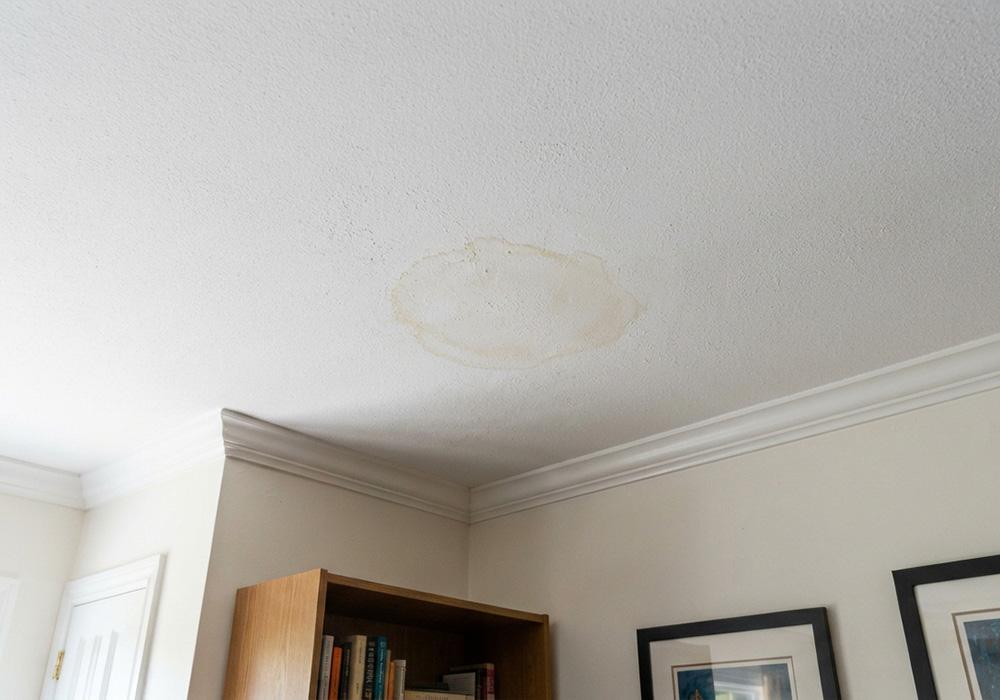
What the stain looks like. A brown or yellow ring with a darker edge means water has wet and dried the area more than once. A stain that's damp, darkening or soft to the touch is an active leak happening now. Fuzzy black, green or gray spots are mold growing on damp drywall or insulation.
The brown ring itself comes from minerals and tannins the water picks up from wood, insulation and dust on the way down, then leaves behind as it dries. That is also why a stain bleeds through ordinary paint.
Common causes of ceiling water stains in Utah homes
In winter, the usual suspects are ice dams, melting attic frost and frozen pipes. The rest of the year, roof flashing, upstairs plumbing and rooftop swamp coolers are common causes.
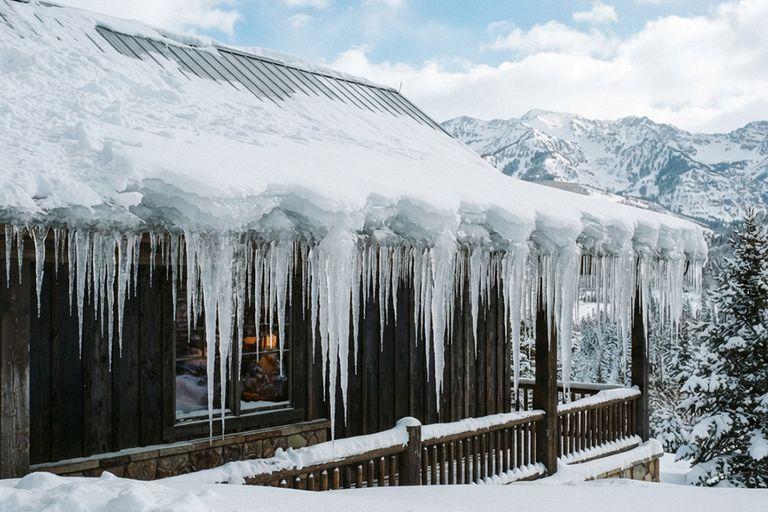
• Ice dams. Snowmelt backs up behind ice at the roof edge and seeps under shingles. Stains show up near outside walls on the top floor, often on a sunny day after a snowfall. See our guide to ice dams on Utah roofs.
• Roof and flashing leaks. Hail, wind and age wear out shingles and the metal flashing around chimneys, vents and skylights.
• Upstairs plumbing. A loose supply line, a failed toilet wax ring, a cracked drain or a leaking shower pan drips straight down into the ceiling below.
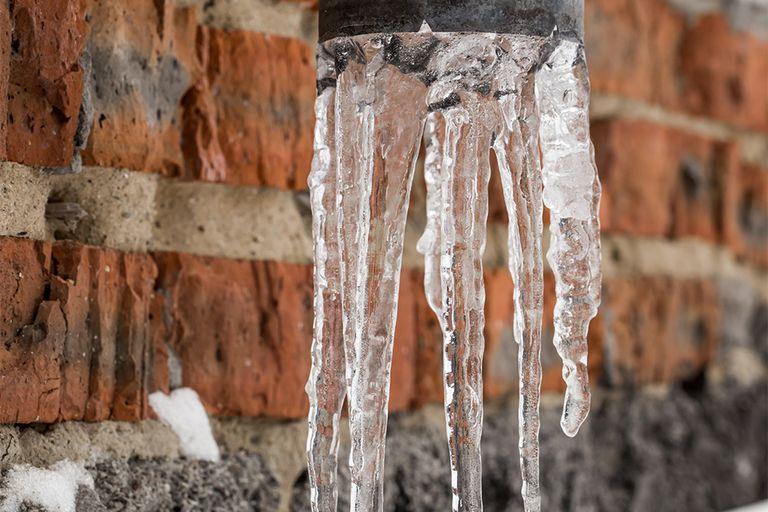
• Frozen or burst pipes. Pipes in outside walls, garages and attics can split in a cold snap and leak into the ceiling below.
• Swamp coolers. Many Utah homes have evaporative coolers on the roof. A leaking pan, float valve or supply line can drip down the duct and stain the ceiling around the vent.
• Attic condensation. Warm, moist air from bathrooms and kitchens condenses on the cold roof deck and freezes. When it thaws, it drips onto the insulation and ceiling. Bath fans that vent into the attic instead of outside are a common cause.
Is a water stain on the ceiling an emergency?
A dry, old stain is not an emergency, but it still needs its source found. A ceiling that is sagging, bulging, dripping or soft is an emergency, because wet drywall is heavy and can give way.
Old, dry ring that isn't growing (not urgent). Find the source of the old leak, then prime and paint or repair the stained area.
Damp or growing stain (act soon, within a day). Find and stop the source of the water, and get the area properly dried.
Dripping water (urgent). If it's coming from plumbing, shut off the water. Catch the drips with a bucket and call for help.
Sagging or bulging ceiling (emergency). Keep everyone out of the room, turn off power to the light fixtures in that area and call a restoration company right away.
Water near light fixtures (emergency). Turn off the breaker for that circuit, but only if you can reach the electrical panel safely.
Do not try to push a bulging ceiling back up or stand under it to poke it. A restoration crew can drain it safely and set up drying.
What to do right now
Stop the water, protect what is below, take photos and get the area dried within 24 to 48 hours. The EPA says wet materials dried in that window usually do not grow mold.
1. Find and stop the source. If the stain is under a bathroom or near plumbing, shut off the water at the fixture or the main valve. If it is near the roof, check the attic with a flashlight for wet insulation or dripping.
2. Protect the room. Move furniture and electronics, lay down plastic and put a bucket under any drips.
3. Take photos of the stain, the source and any damage, for your insurer.
4. Check the attic or floor above. Wet insulation above the stain holds water against the drywall and needs to come out.
5. Get it dried properly. A small, fresh stain from a quick fix may dry with fans. A larger or long-running leak needs moisture meters and drying equipment. Our water damage restoration crews find hidden moisture and dry the ceiling, insulation and framing.
Ceiling sagging or dripping now? Call All Pro Services at 801-505-9800. We answer 24/7.
Will the stain come back if you paint over it?
Yes, if you use ordinary paint. The minerals and tannins in the stain dissolve in water-based paint and bleed back through within days. Seal the stain first with a stain-blocking primer, ideally oil-based or shellac-based, then paint.
• Make sure the leak is fixed and the drywall is completely dry before you prime. Primer over damp drywall fails.
• Clean off any mold first. If the moldy area is large or the drywall is soft, it needs replacing instead.
• Prime the stain and a few inches past its edges, let it dry fully, then paint the whole ceiling panel so the color matches.
Can wet drywall be dried, or does it need replacing?
It depends on how wet it got, for how long, and what it looks like now. EPA guidance says drywall may be dried in place if it has no obvious swelling and the seams are intact. If it is swollen, sagging or crumbling, it should be removed and replaced.
Firm, flat, with seams intact and dried within 48 hours. Drywall in this condition can usually be dried in place and doesn't need to be cut out.
Swollen, sagging or crumbling. This drywall can't be dried in place. It needs to be cut out and replaced.
Wet for longer than 48 hours or growing mold. Drywall in this condition can rarely be saved, and it usually needs to be cut out and replaced.
Insulation above it is soaked. The drywall may still be dried in place, but the insulation always needs to come out. The EPA says wet fiberglass and cellulose insulation should be discarded and replaced.
Water came from a sewer line or another dirty source. Drywall exposed to contaminated water shouldn't be dried in place. It needs to be cut out and replaced.
If your home has a textured "popcorn" ceiling and was built before the mid-1980s, have the texture tested for asbestos before anyone cuts into it. Our asbestos and lead abatement team can handle it safely if it tests positive.
Once the ceiling is dry, our reconstruction crew replaces the drywall, texture and paint, so the same team handles the whole job. For typical costs, see our breakdown of water damage restoration costs in Utah.
Water coming through the ceiling? Call All Pro Services 24/7
If you have an active leak or a sagging ceiling, call us at 801-505-9800. Our IICRC-certified crews answer 24 hours a day, 365 days a year, across Salt Lake, Utah, Davis, Weber, Summit, Wasatch and Tooele counties.
We find the moisture, dry the ceiling and attic, replace what cannot be saved and finish the repair, and we work directly with your insurance company. All Pro Services is a licensed general contractor and has been family-owned since 1987.
Call 801-505-9800 or request a free quote online at allproutah.com.